

Indoor Orchid Care in Hong Kong & Common Mistakes
Complete Phalaenopsis Care × Hands-on Experience Edition
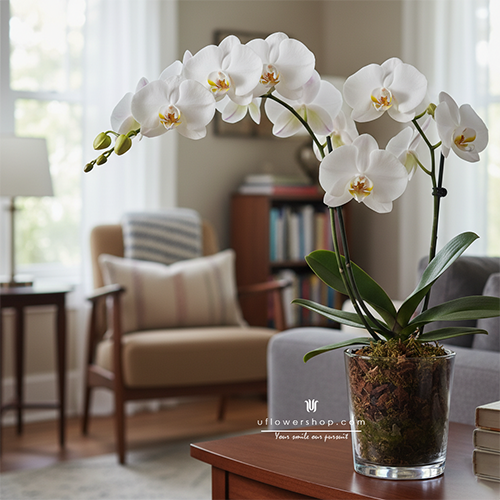
Orchids symbolize elegance and happiness—especially Phalaenopsis—which is celebrated as one of the most graceful indoor plants.
With a long blooming period, refined form, and auspicious meaning, it suits Hong Kong homes and offices perfectly.
However, many Hong Kong growers “love too much but care the wrong way”—overwatering, insufficient light, and poor ventilation
often cause orchids that could bloom for months to wither within weeks.
Drawing on years of professional floristry and cultivation practice,
this article explains step by step: Phalaenopsis growth habits, balancing light–water–temperature–humidity under Hong Kong’s climate,
and the five most common mistakes with their fixes.
---
I. Understand Phalaenopsis by Starting from the “Roots”
1.1 Native Habitat
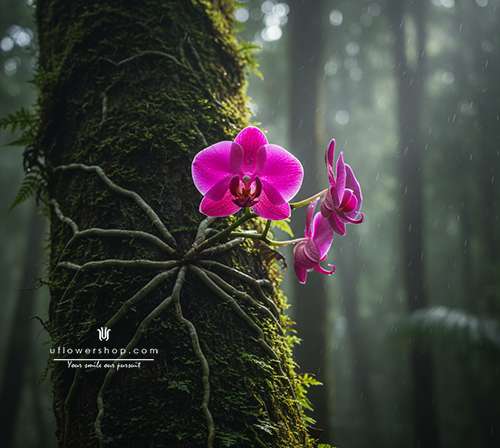
Phalaenopsis originates from the tropical rainforests of Southeast Asia,
mostly as an epiphyte—its roots aren’t buried in soil but cling to tree trunks or rocks to absorb moisture from the air.
Hence it is adapted to humid air, dry and aerated roots, soft light, and steady airflow.
> ✅ Key Concept:
> Phalaenopsis doesn’t like “a lot of water”; it prefers “humid air with roots kept non-soggy”.
1.2 Understanding Orchid Roots
Healthy roots appear silvery-white to jade green. The outer spongy layer is called velamen,
which rapidly absorbs moisture from the air.
Roots turning white indicate dryness; turning green means freshly hydrated; black and mushy signals waterlogging and oxygen deprivation.
---
II. Light: the “Daily Energy Source”
2.1 Light Challenges in Hong Kong Homes
Most Hong Kong flats have relatively weak daylight, plus long hours of air-conditioning.
Many assume “placing by the window is enough”, yet insufficient light is one of the most common issues.
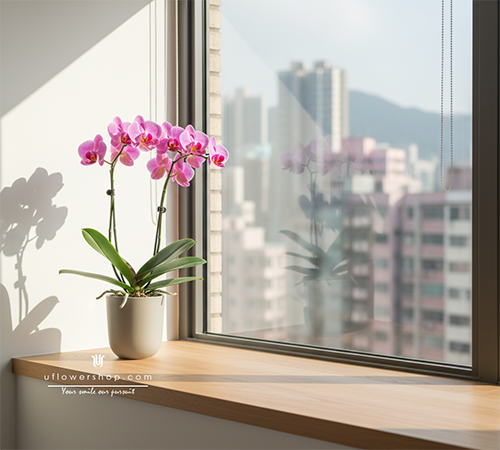
* Ideal light: about 4–6 hours of soft, indirect light daily.
* Placement tips:
* Southeast-facing windowsill is best (gentle morning sun).
* If light is insufficient, use a white-spectrum grow light (PPFD ~100–150 μmol/m²/s).
* Leaf color cues:
* Healthy: olive green.
* Too little light: deeper green leaves, fewer flowers.
* Too much light: yellowing and leaf-edge scorch.
> ? Orchid Tip:
> Light determines flower count. In dim conditions, Phalaenopsis grows leaves but won’t spike well.
---
III. Water & Watering Frequency: the Rhythm Matters
3.1 Watering Principles
Avoid “daily watering”, and never soak the roots.
The correct approach is “wet–dry cycles” so roots can breathe.
* Spring–summer (hot & humid): water every 7–8 days.
* Autumn–winter (cool & drier): every 10–14 days.
* Method:
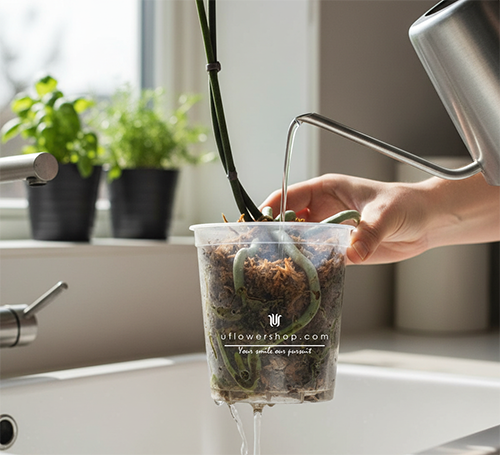
1. Water in the morning (afternoon watering traps heat and humidity).
2. Pour room-temperature water slowly along the pot rim until it drains from the bottom.
3. Discard any water in the saucer after 15 minutes.
* Observation: white roots → dry; green roots → hydrated.
> ? Quotable Snippet:
> “One of the most common reasons for failure in Hong Kong is watering too often. Roots die more from suffocation than from drought.”
---
IV. Ventilation & Humidity: balancing Hong Kong’s damp seasons
4.1 Why ventilation matters more than misting
Phalaenopsis needs moving air to suppress pathogens.
In Hong Kong’s humid months, many think “misting adds good humidity”,
but without airflow it promotes black spots, mildew, and anthracnose.
4.2 Correct practice
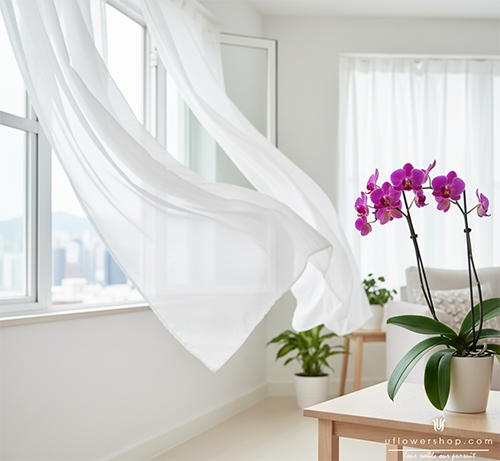
* Open windows 20–30 minutes daily.
* If no windows, run a small fan for gentle circulation.
* Do not blow air directly at the flowers.
* Keep relative humidity ideally at 50–70%.
> ? Rule of thumb:
> “When the air moves, the roots live.”
---
V. Potting Media & Repotting: the orchid’s ‘home’ must breathe
5.1 Ideal media mix
* Pine bark 70%
* Sphagnum moss 20%
* Perlite 10%
This blend drains well, stays airy, and retains moderate moisture without waterlogging.
5.2 When to repot
* Every 1.5 to 2 years.
* Do it after blooming: trim old roots and refresh media.
* Use a clear orchid pot to monitor root health easily.
VI. Five Common Mistakes in Hong Kong & Expert Fixes
| Mistake | Result | Expert Advice |
|---|---|---|
| 1. Overwatering | Root rot, limp leaves, bud drop | Control the rhythm; keep “wet–dry cycles” |
| 2. Insufficient light | Leaves only, few blooms | Move to brighter spot or add grow light |
| 3. A/C blowing directly | Leaf cracks, flower drop | Avoid direct airflow from vents |
| 4. Sealed, stagnant air | Mildew, scale insects | Open windows; maintain gentle circulation |
| 5. Over-strong fertilizer | Burnt root tips | Dilute to 1/4 strength each time |
> ⚠️ Real-world note:
> Many people place Phalaenopsis in bathrooms for humidity, but poor airflow often leads to total root rot.
---
VII. Extend Bloom Time & Re-blooming Tips
1. After blooms fade, cut the spike: keep about 2 cm above the first node to encourage a side spike.
2. Feed for blooms: apply a low-nitrogen, higher P & K fertilizer (N:P:K ≈ 10:30:20) once a month after flowering.
3. Simulate day–night temperature difference: about 5°C cooler at night in autumn helps bud initiation.
4. Rest period: pause feeding for two weeks after flowering to let the plant recover.
---
VIII. Display & Gifting Ideas
* Home display: living room or study near a bright window; avoid harsh direct sun.
* Office: place in naturally lit areas or on reception desks—symbolizing smooth success.
* Gifting meanings:
* White Phalaenopsis: purity and blessings.
* Purple Phalaenopsis: nobility and success.
* Pink Phalaenopsis: happiness and romance.
> ? Etiquette tip:
> Add a message card with wishes like “Prosperity in Bloom” for a thoughtful finish.
---
IX. FAQ
Q1: Can Phalaenopsis thrive in air-conditioned rooms?
A1: Yes. Avoid direct airflow from vents, air the room for 20 minutes daily, and add humidity when air is very dry.
Q2: Do soft leaves always mean the plant is thirsty?
A2: Not necessarily. If roots are healthy and leaves are still green, it’s often waterlogging or low oxygen at the roots. Check drainage first.
Q3: What’s the best time to water?
A3: 8–10 a.m. Temperatures are rising and evaporation is moderate, avoiding nighttime stagnation.
Q4: How to prevent scale insects?
A4: Keep air moving, reduce dust on leaves, and wipe foliage with a damp cloth monthly.
Q5: Leaves stay green after flowering—should I discard the plant?
A5: No. Green leaves mean the plant is healthy. Trim the spike and continue care; it can bloom again next season.
---
X. Conclusion
Hong Kong’s climate is indeed challenging for orchids, but with “adequate light, good airflow, less frequent watering, and closer observation”,
Phalaenopsis can bloom elegantly indoors for months and even rebloom year after year.
Remember: successful orchid care relies on understanding, not busyness.
Leave a Reply Cancel Reply