
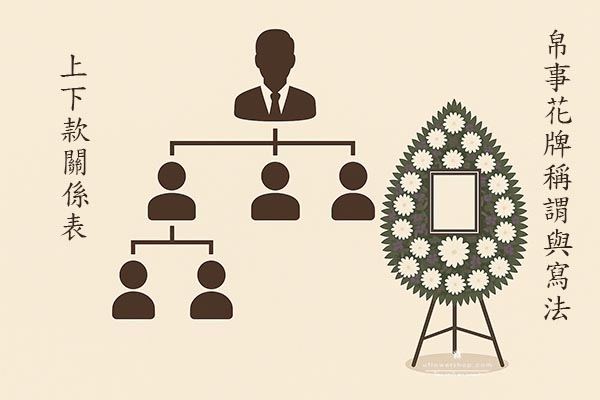
Condolence Wreath Addressing and Writing Full Guide (Upper & Lower Lines Relationship Table)
In Hong Kong, sending a condolence wreath (also known as a flower basket) is a crucial part of expressing mourning and respect to the deceased at traditional funerals. However, in such solemn and etiquette-conscious occasions, many people feel anxious about how to write eulogies or choose appropriate titles, fearing an unintentional faux pas.
1. Why are Addressing and Self-Addressing So Important?
The addressing (upper line) and self-addressing (lower line) on a condolence wreath are more than just words; they convey:
- Family Ethics and Relationships: Accurately reflect your kinship and seniority within the family relative to the deceased.
- Respect and Mourning: Appropriate titles are a fundamental expression of respect for the deceased and their family, and an integral part of conveying deep sorrow.
- Cultural Etiquette: In traditional Chinese culture, funeral etiquette is a significant manifestation of filial piety and interpersonal relationships.
2. Condolence Wreath Addressing (Upper Line) & Self-Addressing (Lower Line) Quick Reference Table for Male Senders
The table below provides suggested titles (upper line) and self-addresses (lower line) for condolence wreaths, based on your (male sender's) relationship with the deceased:
| Sender (Male) Relationship to Deceased | Deceased's Gender | Upper Line (Addressed to Deceased) | Lower Line (Sender's Self-Address) | Notes |
|---|---|---|---|---|
| Direct Relatives | ||||
| Father | Male | 敬愛的父親 千古 父親大人 冥鑒 |
孝男 [Your Name] 叩輓 | 孝男 (filial son), 叩輓 (deepest condolences with kowtow) |
| Mother | Female | 敬愛的母親 靈右 母親大人 靈右 |
孝男 [Your Name] 叩輓 | 孝男 (filial son), 叩輓 (deepest condolences with kowtow) |
| Grandfather / Maternal Grandfather | Male | 祖父大人 千古 親愛的祖父 千古 |
孝孫 [Your Name] 叩輓 | 孝孫 (filial grandson) |
| Grandmother / Maternal Grandmother | Female | 祖母大人 靈右 親愛的外婆 靈右 |
孝孫 [Your Name] 叩輓 | 孝孫 (filial grandson) |
| Son (Deceased Young) | Male | 愛子 [Son's Name] 痛輓 | 父 [Your Name] 痛輓 | 痛輓 (deeply mourning) |
| Daughter (Deceased Young) | Female | 愛女 [Daughter's Name] 痛輓 | 父 [Your Name] 痛輓 | 痛輓 (deeply mourning) |
| Elder Brother | Male | 胞兄 [Brother's Name] 千古 | 胞弟 [Your Name] 敬輓 | |
| Younger Brother | Male | 胞弟 [Brother's Name] 千古 | 胞兄 [Your Name] 敬輓 | |
| Elder Sister | Female | 胞姊 [Sister's Name] 靈右 | 胞弟 [Your Name] 敬輓 | |
| Younger Sister | Female | 胞妹 [Sister's Name] 靈右 | 胞兄 [Your Name] 敬輓 | |
| In-laws (Wife's Relatives) | ||||
| Father-in-law (Wife's Father) | Male | 岳父大人 千古 家翁大人 千古 |
賢婿 [Your Name] 敬輓 | 賢婿 (son-in-law) |
| Mother-in-law (Wife's Mother) | Female | 岳母大人 靈右 家姑大人 靈右 |
賢婿 [Your Name] 敬輓 | 賢婿 (son-in-law) |
| Wife's Elder Brother | Male | 內兄 [Name] 千古 | 襟弟 [Your Name] 敬輓 | 襟弟 (younger brother-in-law, referring to wife's brother) |
| Wife's Younger Brother | Male | 內弟 [Name] 千古 | 襟兄 [Your Name] 敬輓 | 襟兄 (elder brother-in-law, referring to wife's brother) |
| Wife's Elder Sister | Female | 內姊 [Name] 靈右 | 襟弟 [Your Name] 敬輓 | 襟弟 (younger brother-in-law, referring to wife's sister) |
| Wife's Younger Sister | Female | 內妹 [Name] 靈右 | 襟兄 [Your Name] 敬輓 | 襟兄 (elder brother-in-law, referring to wife's sister) |
| Other Relatives | ||||
| Paternal Uncle (Father's Elder/Younger Brother) | Male | 伯父/叔父 [Name] 千古 | 侄兒 [Your Name] 敬輓 | |
| Paternal Aunt-in-law (Father's Brother's Wife) | Female | 伯娘/嬸母 [Name] 靈右 | 侄兒 [Your Name] 敬輓 | |
| Paternal Aunt / Paternal Uncle-in-law | Female/Male | 姑母 [Name] 靈右 姑丈 [Name] 千古 |
侄兒 [Your Name] 敬輓 | |
| Maternal Uncle / Maternal Aunt-in-law | Male/Female | 舅父 [Name] 千古 舅母 [Name] 靈右 |
外甥 [Your Name] 敬輓 | |
| Maternal Aunt / Maternal Uncle-in-law | Female/Male | 姨母 [Name] 靈右 姨丈 [Name] 千古 |
外甥 [Your Name] 敬輓 | |
| Paternal/Maternal Cousins (Male) | Male | 堂兄/表兄 [Name] 千古 堂弟/表弟 [Name] 千古 |
堂弟/表弟 [Your Name] 敬輓 堂兄/表兄 [Your Name] 敬輓 |
Self-address based on seniority |
| Paternal/Maternal Cousins (Female) | Female | 堂姊/表姊 [Name] 靈右 堂妹/表妹 [Name] 靈右 |
堂弟/表弟 [Your Name] 敬輓 堂兄/表兄 [Your Name] 敬輓 |
Self-address based on seniority |
| Friends / Colleagues / Clients | ||||
| Male Friend / Colleague / Client | Male | [Deceased Name] 先生千古 | [Your Name] 敬輓 | Most common and appropriate |
| Female Friend / Colleague / Client | Female | [Deceased Name] 女士靈右 | [Your Name] 敬輓 | Most common and appropriate |
| Representing Organization / Family | ||||
| (Representing Company/Organization) | N/A | [Deceased Name] 先生/女士 千古/靈右 | [Company/Organization Name] 敬輓 | |
| (Representing Entire Family) | N/A | [Deceased Name] 先生/女士 千古/靈右 | [Your Name] 闔家 敬輓 | |
| (Representing Couple) | N/A | [Deceased Name] 先生/女士 千古/靈右 | [Your Name] 偕妻 敬輓 | If your wife is also a sender, and you are the primary signatory |
3. Condolence Wreath Addressing (Upper Line) & Self-Addressing (Lower Line) Quick Reference Table for Female Senders
The table below provides suggested titles (upper line) and self-addresses (lower line) for condolence wreaths, based on your (female sender's) relationship with the deceased:
| Sender (Female) Relationship to Deceased | Deceased's Gender | Upper Line (Addressed to Deceased) | Self-Address (Lower Line) (Sender's Signature) | Notes |
|---|---|---|---|---|
| Direct Relatives | ||||
| Father | Male | 敬愛的父親 千古 父親大人 冥鑒 |
孝女 [Your Name] 叩輓 | 孝女 (filial daughter), 叩輓 (deepest condolences with kowtow) |
| Mother | Female | 敬愛的母親 靈右 母親大人 靈右 |
孝女 [Your Name] 叩輓 | 孝女 (filial daughter), 叩輓 (deepest condolences with kowtow) |
| Grandfather / Maternal Grandfather | Male | 祖父大人 千古 親愛的祖父 千古 |
孝孫女 [Your Name] 叩輓 | 孝孫女 (filial granddaughter) |
| Grandmother / Maternal Grandmother | Female | 祖母大人 靈右 親愛的外婆 靈右 |
孝孫女 [Your Name] 叩輓 | 孝孫女 (filial granddaughter) |
| Son (Deceased Young) | Male | 愛子 [Son's Name] 痛輓 | 母 [Your Name] 痛輓 | 痛輓 (deeply mourning) |
| Daughter (Deceased Young) | Female | 愛女 [Daughter's Name] 痛輓 | 母 [Your Name] 痛輓 | 痛輓 (deeply mourning) |
| Elder Brother | Male | 胞兄 [Brother's Name] 千古 | 胞妹 [Your Name] 敬輓 | |
| Younger Brother | Male | 胞弟 [Brother's Name] 千古 | 胞姊 [Your Name] 敬輓 | |
| Elder Sister | Female | 胞姊 [Sister's Name] 靈右 | 胞妹 [Your Name] 敬輓 | |
| Younger Sister | Female | 胞妹 [Sister's Name] 靈右 | 胞姊 [Your Name] 敬輓 | |
| Husband | Male | 愛夫 [Husband's Name] 千古 先夫 [Husband's Name] 千古 |
妻 [Your Name] 泣輓 | 泣輓 (deepest mourning) |
| In-laws (Husband's Relatives) | ||||
| Father-in-law (Husband's Father) | Male | 翁父大人 千古 家翁大人 千古 |
媳 [Your Name] 敬輓 | 媳 (daughter-in-law) |
| Mother-in-law (Husband's Mother) | Female | 姑母大人 靈右 家姑大人 靈右 |
媳 [Your Name] 敬輓 | 媳 (daughter-in-law) |
| Husband's Paternal Uncle / Aunt-in-law | Male | 伯父/叔父 [Name] 千古 | 侄媳 [Your Name] 敬輓 | 侄媳 (niece-in-law) |
| Husband's Paternal Aunt-in-law | Female | 伯娘/嬸母 [Name] 靈右 | 侄媳 [Your Name] 敬輓 | 侄媳 (niece-in-law) |
| Other Relatives | ||||
| Paternal Aunt / Paternal Uncle-in-law | Female/Male | 姑母 [Name] 靈右 姑丈 [Name] 千古 |
侄女 [Your Name] 敬輓 | |
| Maternal Uncle / Maternal Aunt-in-law | Male/Female | 舅父 [Name] 千古 舅母 [Name] 靈右 |
外甥女 [Your Name] 敬輓 | |
| Maternal Aunt / Maternal Uncle-in-law | Female/Male | 姨母 [Name] 靈右 姨丈 [Name] 千古 |
外甥女 [Your Name] 敬輓 | |
| Paternal/Maternal Cousins (Male) | Male | 堂兄/表兄 [Name] 千古 堂弟/表弟 [Name] 千古 |
堂姊/表姊 [Your Name] 敬輓 堂妹/表妹 [Your Name] 敬輓 |
Self-address based on seniority |
| Paternal/Maternal Cousins (Female) | Female | 堂姊/表姊 [Name] 靈右 堂妹/表妹 [Name] 靈右 |
堂姊/表姊 [Your Name] 敬輓 堂妹/表妹 [Your Name] 敬輓 |
Self-address based on seniority |
| Friends / Colleagues / Clients | ||||
| Male Friend / Colleague / Client | Male | [Deceased Name] 先生千古 | [Your Name] 敬輓 | Most common and appropriate |
| Female Friend / Colleague / Client | Female | [Deceased Name] 女士靈右 | [Your Name] 敬輓 | Most common and appropriate |
| Representing Organization / Family | ||||
| (Representing Company/Organization) | N/A | [Deceased Name] 先生/女士 千古/靈右 | [Company/Organization Name] 敬輓 | |
| (Representing Entire Family) | N/A | [Deceased Name] 先生/女士 千古/靈右 | [Your Name] 闔家 敬輓 | |
| (Representing Couple) | N/A | [Deceased Name] 先生/女士 千古/靈右 | [Your Name] 偕夫 敬輓 | If your husband is also a sender, and you are the primary signatory |
4. Common Four-Character Eulogies (Middle Line)
The middle line typically consists of four-character eulogies, used to summarize praise for the deceased or express sorrow. Here are some commonly used eulogies, which can be chosen based on the deceased's gender, age, and virtues:
- Common for Males: 哲人其萎 (A sage has withered), 儀型萬方 (A model for all), 碩德貽徽 (Great virtue leaves a legacy), 典型足式 (A perfect example), 福壽全歸 (Returned with complete blessings and longevity), 音容宛在 (Voice and appearance still present), 德高望重 (Highly virtuous and respected), 高山仰止 (Look up to a high mountain), 遽歸道山 (Returned swiftly to the mountain of Tao), 英靈不朽 (Heroic spirit immortal)
- Common for Females: 懿範長存 (Noble example lives on), 巾幗典範 (A model among women), 淑德流芳 (Virtuous reputation spreads), 瑤池赴宴 (Attended a banquet in the Jade Pond), 音容宛在 (Voice and appearance still present), 德高望重 (Highly virtuous and respected), 母儀足式 (A perfect example of motherhood), 駕返瑤池 (Returned to the Jade Pond), 彤管流芳 (Virtuous deeds leave a lasting legacy)
- Universal: 音容宛在 (Voice and appearance still present), 永垂不朽 (Eternal and immortal), 精神長存 (Spirit lives on), 功業長昭 (Achievements shine forever), 世澤流芳 (Beneficence flows through generations)
- For Deceased Young: 英年早逝 (Died young), 天妒英才 (Heaven envies talent), 痛失所愛 (Painfully lost beloved), 蘭摧玉折 (Orchid withered, jade broken - describes premature death of a young person)
5. A Little Knowledge: Why Use "千古" and "靈右"?
In condolence wreath eulogies, "千古" (qiān gǔ) and "靈右" (líng yòu) are two common honorifics with deep cultural connotations, each having specific meanings and applicable situations:
- "千古" (qiān gǔ): Eternal Remembrance and Respect
- Meaning: "千古" means "throughout a thousand ages" or "eternal." When used in a eulogy, it expresses eternal remembrance and high respect for the deceased's virtues, achievements, or spirit, believing their influence will last for a long time, never fading. It also carries the heavy meaning of eternal farewell to the deceased.
- Usage: Traditionally, it is mostly used for male deceased individuals.
- "靈右" (líng yòu): Respectful Offering Before the Spirit Tablet
- Meaning: "靈" refers to the deceased's spirit or spirit tablet; "右" (right) in ancient times implied respect and nobility. "靈右" extends to mean "before the deceased's spirit tablet," a place for the deceased's soul to rest. It is an honorific address to the deceased's soul or spirit tablet, indicating that the eulogy is respectfully offered to the deceased before their spirit tablet.
- Usage: Traditionally, it is mostly used for female deceased individuals. However, in modern society, its usage tends to be more flexible; it may sometimes be used universally for males when a couple passes away together or for brevity, as its tone is softer.
Conclusion
Correctly using addressing and self-addressing in condolence wreaths is a subtle expression of respect and sorrow. We hope this comprehensive guide for both male and female senders helps you confidently navigate the etiquette of condolence wreath writing, allowing you to convey your deepest thoughts and respect when bidding farewell to your loved ones.
If you have any further questions about choosing condolence wreaths or writing eulogies, or require more specific professional advice, please feel free to contact a professional funeral service company or florist. They will be happy to assist you.