
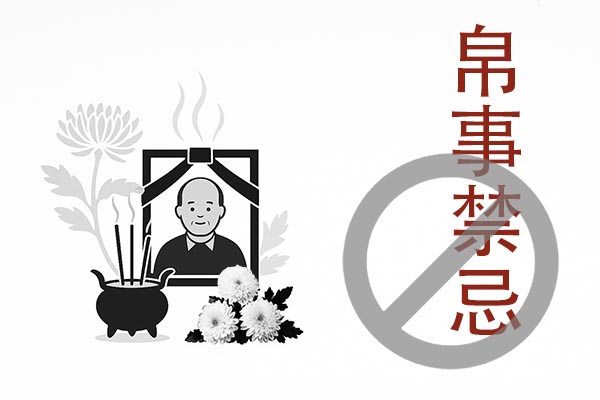
Funeral Taboos: What You Should Know About 'Dos and Don'ts' in Hong Kong Funerals
In Hong Kong, a funeral is not just a ceremony to bid farewell to the deceased; it also carries deep cultural and traditional significance. Within these traditions, there are "funeral taboos" – specific rules of conduct to observe before and after a funeral to show respect for the deceased, consideration for the family, and to avoid bad luck or offense.
1. What are "Funeral Taboos" and Why Observe Them?
"Funeral taboos" refer to specific rules that people need to avoid or adhere to in terms of behavior, attire, speech, and diet during and around the time of a funeral. They primarily stem from:
- Respect for the Deceased: Ensuring the entire ceremony is solemn and respectful, avoiding any form of offense to the departed.
- Consideration for the Family: Preventing unintentional actions from adding distress or discomfort to the grieving family.
- Culture and Beliefs: Many taboos are linked to traditional folk beliefs, feng shui, and practices to avoid misfortune, aiming to protect the living from "impurity" or "negative energy."
Understanding these taboos is not about superstition, but rather a profound sense of reverence for life, remembrance of the deceased, and care for the living.
2. Common Funeral Taboos and Rules of Conduct
2.1 Attire and Appearance:
- Avoid Bright Colors: Absolutely avoid wearing bright red, purple, vibrant yellow, or vivid green. These colors symbolize celebration and are inappropriate for the solemn atmosphere of a funeral.
Recommended: Choose plain, subdued clothing such as black, white, grey, or dark blue. This is the most basic and important etiquette. - Avoid Excessive Adornment: Refrain from heavy makeup or wearing overly elaborate jewelry.
Recommended: Maintain a simple and tidy appearance.
2.2 Speech and Conduct:
- Avoid Loudness and Giggling: A funeral venue is a solemn place. Strictly avoid loud talking, laughing, playing on mobile phones, or discussing lighthearted topics unrelated to the funeral.
Recommended: Maintain silence, speak softly, and conduct yourself with solemnity. - Avoid Criticism or Gossip: Refrain from criticizing the deceased or the family, or commenting disparagingly on the ceremony arrangements at the funeral.
Recommended: Maintain empathy, offer silent support, and express condolences. - Avoid Touching the Coffin or Body: Without the family's consent, never casually touch the coffin or the deceased's body, as this is considered highly disrespectful.
Recommended: If viewing is permitted, please follow the funeral director's instructions.
2.3 Participation of Specific Individuals:
- Pregnant Women and Infants/Young Children: Traditionally, pregnant women and infants (especially those under one year old) should avoid attending funerals as much as possible.
Reason: Tradition holds that the "yin energy" of a funeral might be harmful to pregnant women and fetuses, or that infants' yang energy is weaker and more susceptible to influence.
Modern Considerations: Funeral home environments might have poor ventilation, be crowded, and potentially stressful for pregnant women and infants. If attendance is unavoidable, it's advised to avoid the core areas of the funeral hall and leave as soon as the ceremony is complete. - Severely Ill or Frail Individuals: Should avoid attending to prevent worsening their condition or being negatively affected.
- Those "Clashing" with the Deceased: Some traditions, based on zodiac signs or birth charts, believe certain individuals might "clash" with the deceased and should avoid attending the funeral procession. This is usually decided by the family or a feng shui master, and outsiders need not interfere excessively.
2.4 Handling of "Lucky Money" (吉儀):
- Discard "Lucky Money" Immediately; Do Not Bring Home:
- Definition: "Lucky Money" (吉儀) is a white vertical envelope with a red stripe in the middle, inscribed with "吉儀". It typically contains a small white towel (now often tissue paper), a piece of candy, and a one-dollar coin, given as a token of thanks to guests attending the funeral.
- Usage and Taboos:
- White Towel/Tissue: Used for wiping tears; can be discarded after use.
- Candy: Symbolizes reducing sorrow and sadness; must be eaten on the same day. If you don't like sweets, you can lick it before discarding.
- One-Dollar Coin: This is a token of return for condolence money. It must be spent on the same day (e.g., by buying something) and must not be brought home. Traditionally, bringing it home is believed to bring bad luck and misfortune.
2.5 Condolence Money (帛金) Etiquette:
- Condolence Money Amount: Add One Dollar to an Odd Number:
- Amount: The amount of condolence money typically involves adding an extra one-dollar coin to an odd-numbered sum, such as $101, $201, $501, etc.
- Reasons:
- "Only Once": Ending the amount with "01" (e.g., $101) implies "only once," signifying that this unfortunate event should happen only once and not recur.
- Avoiding "Longevity": If the condolence money is an even number, after the family deducts the one-dollar return from the "lucky money," the remainder would end in nine (e.g., $100 - $1 = $99). In Cantonese, "nine" (九) sounds similar to "long" (久), implying longevity, which is undesirable for a funeral. Therefore, by adding one dollar initially, the remainder after the deduction will not end in nine.
2.6 Dietary Taboos:
- Eating Beef at Funerals May Offend Underworld Guards:
- Fasting and Purification: Those attending a funeral should ideally fast and cleanse themselves on that day. Besides showing respect for the deceased, some religions believe that vegetarianism helps alleviate the deceased's sins and suffering.
- Avoid Beef: If one must consume meat, strictly avoid beef. Traditionally, the underworld guards (鬼差) are believed to be "Ox-Head and Horse-Face" (牛頭馬面). Eating beef is seen as consuming their kin, which might anger them. It's best to show them respect so they don't trouble the deceased.
2.7 Farewell and Thanks:
- Do Not Say "Thank You" (多謝); Use "You're Kind" (有心) Instead:
- Avoid "Thank You": The bereaved family will be very grateful for those who make the effort to attend, but they should never say "Thank You" (多謝) to them. Because a funeral is not a joyous occasion, saying "Thank You" is considered inauspicious, implying a wish for such an unfortunate event to recur.
- Alternative Phrases: Use phrases like "You're kind" (有心), "Thank you for your trouble" (費心了), or "Thank you for coming" (謝謝您來).
- Do Not See Guests Off: When guests are leaving, the family should also not "see them off." This is because those being "seen off" from a funeral home are not the living, and seeing them off is akin to cursing them. Politely say "bye-bye" or "take care" and let them leave on their own.
2.8 Post-Funeral Handling:
- Avoid Going Home Directly: Traditionally, one should not go straight home after attending a funeral.
Recommended: First, spend some time in a crowded place (e.g., a shopping mall, restaurant) or visit a barbershop, flower shop, etc., to symbolize "washing away" any negative aura. - Purification: After attending a funeral, one should immediately bathe and change clothes upon returning home, and wash the clothes worn.
Recommended: One can bathe with pomelo leaves (or their extract) in water, or sprinkle some rice and salt on the body for purification and warding off evil. - Avoid Visiting Relatives/Friends or Attending Celebrations: After attending a funeral, especially during the mourning period (if the deceased is a close relative), avoid immediately visiting other relatives' or friends' homes, especially those with infants or pregnant women. Also, avoid attending weddings, birthday parties, or other celebratory events.
Reason: To avoid bringing "mourning energy" to others, which is considered inauspicious.
Recommended: Wait for a period of time, or obtain their consent before visiting.
3. Modern Understanding and Flexibility
With changing times, many funeral taboos have become more flexible in modern society, especially in urban living. However, their core principles – respect and consideration – remain the most important guidelines when attending a funeral.
- Respect Family Wishes: If the family has specific religious or cultural requirements, try your best to comply.
- Communicate: If unsure about certain behaviors, consult the family or funeral director.
- Sincerity Matters Most: Ultimately, your genuine condolences and remembrance of the deceased are paramount.
Conclusion
"Funeral taboos" are an indispensable part of Hong Kong's funeral culture, reflecting people's attitudes towards life and death and their emphasis on traditional etiquette. Understanding and adhering to these taboos will not only help you behave appropriately at a funeral but also demonstrate respect for the deceased and care for the family, ensuring the farewell ceremony proceeds with solemnity and warmth.